The Bass Angler February 2015 – Ask Uncle
ASK UNCLE WITH GEORGE ROBEY III We’re happy to report that this feature “Ask Uncle” has found favour with our readers. The BASS ANGLER makes you a more informed and better angler! Find out anything you want to know about bass, bass behaviour, fisheries management, fishing techniques, equipment, tackle, rigging and methods. Quite simply, all you have to do is ask! Free of charge! No Fees attached!
Fishing Heavy Vegetation with Mark Lassagne
Here is how it works. You, the reader, emails any question about bass fishing and we will ferret out the answers from top experts in the field. You will get fresh, cutting-edge information from specialists in SA and abroad. Not staff writers. Not generalists. Real experts. There are no questions too basic and no questions too advanced. We will go wherever it takes to get the best answers for you, the reader.
E-Mail questions to: editor@thebassangler.com marked “Uncle”or send them via THE BASS ANGLER Facebook page.
Please sign your question the way you want it to appear in the magazine. You can use initials, first name or full name. Don’t be embarrassed to ask any question, and always tell us your city of residence.
PLEASE TELL ME HOW TO CATCH BASS OUT OF LILY PADS AND HEAVY SURFACE MOSS? EDDIE, NELSPRUIT QUESTION
We all know that summer heat drives big bass to either deep water or heavy, shaded cover. Therefore, we presented this month’s question to an American fishing industry and tournament professional, Mark Lassagne, who tells you all you need to know about fishing lily pads and moss beds. The knowledge presented here will benefit bank anglers, boat anglers and tubers.
In “the California Delta” has a plethora of vegetation, Hyacinth, Coon tail, Pond Weed, Primrose and other types of invasive vegetation. If you’re not getting into the thick vegetation, you won’t catch fish. Bass love heavy cover, as protection from the heat/cold and for the unlimited food supply. Thick, matted vegetation has the ability to harbor a good population of bass, but not all matted vegetation is good. Fishing matted vegetation can be extremely productive with the right equipment, baits and knowledge.
EQUIPMENT:
Just like you wouldn’t tow your bass boat with a Corolla, you can’t fish heavy cover with a finesse outfit. My setup includes an Okuma Matt Daddy 7’11” (TCS-C-7111XH) extra heavy rod with just a little tip action. I match that up with an Okuma 7.3:1 reel, 65 to 80lb braid. Make sure the drag is locked down; if it slips you can easily lose a big one. I use a 6th Sense PEX-X stopper, River2sea 1 or 1.5 ounce Trash Bomb tungsten weight and a Gamakatsu Heavy Wire hook tied with a Snell knot. Each of these items have been carefully chosen for the purpose of fishing heavy cover.
BAITS:
My number one bait by far has been the Yamamoto Flappin Hog, followed by the Reaction Innovations 420 Beaver, Missile D Bomb and Jackall Sasuteki Craw. The best colour for me has been Green Pumpkin with red flake. Green pumpkin is the number one seller for most every plastics company, so the colour choice is not unique. However, every body of water is different. It’s pretty dark under a weed mat so I’m not overly picky on colour – close is ok. I generally have one rod rigged with a punch skirt and one without. Over the last year I’ve had better results without a skirt.
PRESENTATION:
Presenting the bait correctly is fairly simple, but does require some practice. Some anglers toss the bait up in the air and have it come crashing down, but I’m not a fan of that. I’ll pitch the bait out using a swing type cast causing the bait to fly low. I cast towards a small hole in the lily pads or weed mat. If the bait does not penetrate on the landing I’ll shake it a little and move it small amounts until it drops through. I use a 1oz weight. If the bait does not go through, I will switch to a 1.5oz.
The most important part of the cast is the drop through the vegetation. The reel should remain in free spool and once the bait penetrates, hold your rod at 10 o’clock and let the line peel off the spool at controlled speed. When the bait hits bottom, shake it a few times, pull it halfway up, shake it a couple more times,
lastly pull it to just under the mat and shake it again.
BITES:
Most bites come on the initial fall but I’ve caught several bass over 7lb shaking it off the bottom, so it’s worth the effort. The bite can be different on any cast and that is why the rod is so important – hence a light but sensitive rod. Sometimes the strike will feel like you hit something hard, other times you may “feel” something… just not right. Often, the line peels off your reel. If you’re really lucky, you will feel a noticeable tic. No matter which way they bite, make sure you get a good hook set. Reel straight up, causing the bass to flop out on top of the mat, then winch him to the boat. With my set up I can flip an 8lber in the boat.
LOCATION:
Not all matted vegetation is the same. I focus on matted vegetation and lily pads covering areas that normally hold bass, such as points, pockets, drops and ledges. I try to stay away from vast areas covered with vegetation. However, don’t overlook a special spot within a vast area. I have one bank that has hyacinth for 300 yards but in the center the depth drops from 3ft to 6ft. That spot most always holds a couple of fish. I have found that most big bass are caught in 5 to 10ft of water.
My best results have come from fishing new areas day after day, fishing in the moment and developing patterns. I’ll look for patterns, such as fish on a point in 5ft of water, pockets or drop-offs, always trying to figure out where they are and what presentation they want. Once I get a clue I’ll work to expand on it. NOTE: I found that picking apart heavy vegetation is unnecessary. I’ll generally cast five or more feet apart, then if I catch a fish, I’ll return a few minutes later and go over it again.
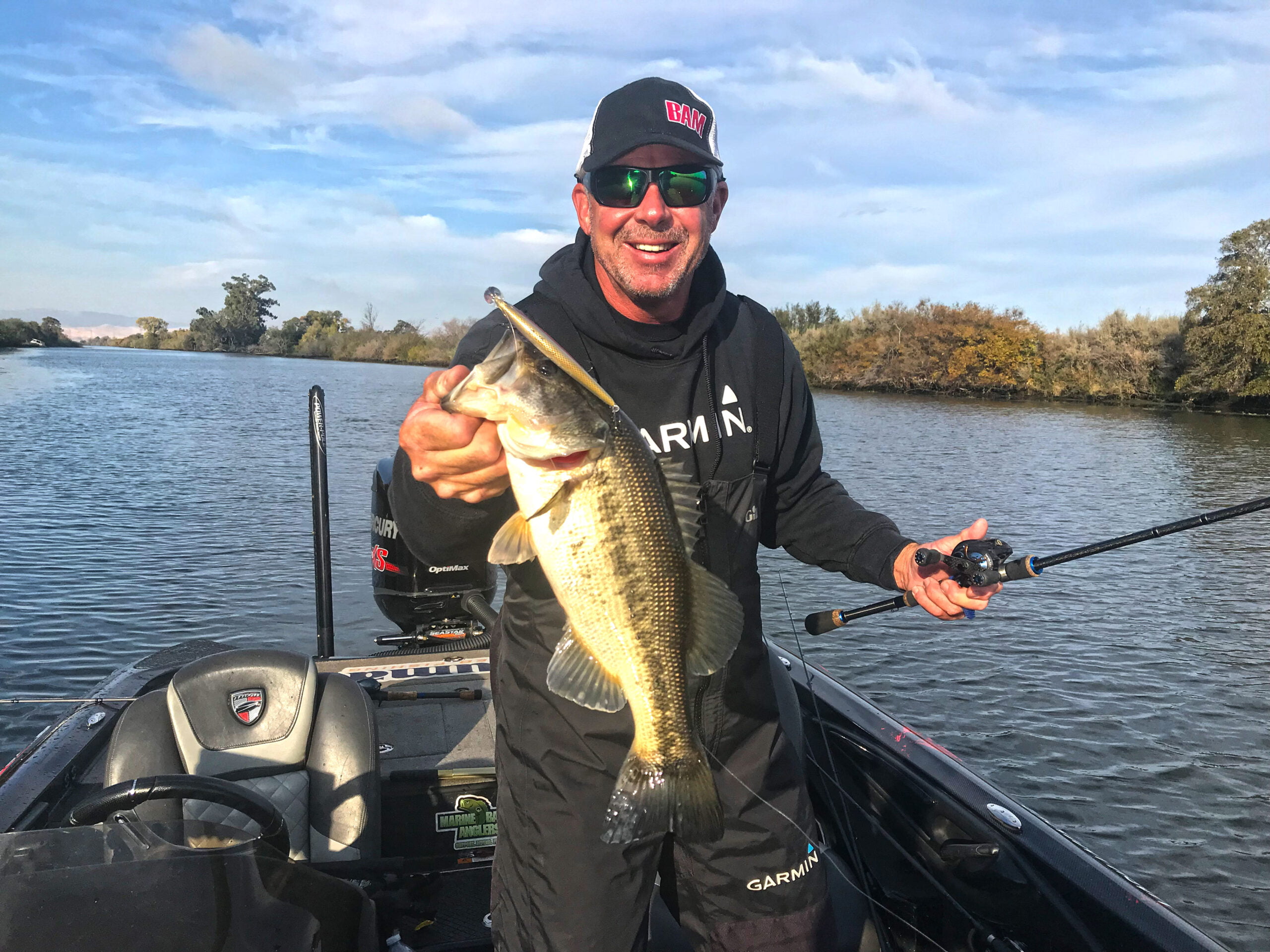
Mark Lassagne (luh-SAYN). I live in Dixon, California and proudly served our great nation as a US Marine. As a competitor, I love tournament bass fishing and have had some outstanding success competing up and down the West Coast. Besides tournament fishing, I own and run Bass Angler Magazine– a nationwide publication focusing on the how-to aspects of bass fishing.. FOLLOW MARK ON: facebook/mark.lassagne or www.ezbass.com
Mark Lassagne
Mark Lassagne is a professional bass angler, outdoor writer, and publisher based in Northern California. As the founder of Bass Angler Magazine and the BAM Tournament Trail, Mark has dedicated his career to growing and promoting the sport of bass fishing, especially on the West Coast. With decades of tournament experience across the country—from MLF Toyota Series events to his own BAM Pro Tour—Mark brings a unique blend of on-the-water knowledge and industry insight. The content of his writing focuses on helping anglers of all skill levels to catch more fish, understand cutting-edge techniques, and stay connected to the latest trends in bass fishing. When he’s not behind the wheel of his Ford F-350 hauling the BAM stage, you’ll find him chasing bass in California’s best fisheries in his Bass Cat.
Used by Google Analytics to determine which links on a page are being clicked
30 seconds
_ga_
ID used to identify users
2 years
_gid
ID used to identify users for 24 hours after last activity
24 hours
_gat
Used to monitor number of Google Analytics server requests when using Google Tag Manager
1 minute
_gac_
Contains information related to marketing campaigns of the user. These are shared with Google AdWords / Google Ads when the Google Ads and Google Analytics accounts are linked together.
90 days
__utma
ID used to identify users and sessions
2 years after last activity
__utmt
Used to monitor number of Google Analytics server requests
10 minutes
__utmb
Used to distinguish new sessions and visits. This cookie is set when the GA.js javascript library is loaded and there is no existing __utmb cookie. The cookie is updated every time data is sent to the Google Analytics server.
30 minutes after last activity
__utmc
Used only with old Urchin versions of Google Analytics and not with GA.js. Was used to distinguish between new sessions and visits at the end of a session.
End of session (browser)
__utmz
Contains information about the traffic source or campaign that directed user to the website. The cookie is set when the GA.js javascript is loaded and updated when data is sent to the Google Anaytics server
6 months after last activity
__utmv
Contains custom information set by the web developer via the _setCustomVar method in Google Analytics. This cookie is updated every time new data is sent to the Google Analytics server.
2 years after last activity
__utmx
Used to determine whether a user is included in an A / B or Multivariate test.
18 months
_ga
ID used to identify users
2 years
Marketing cookies are used to follow visitors to websites. The intention is to show ads that are relevant and engaging to the individual user.
A video-sharing platform for users to upload, view, and share videos across various genres and topics.
Registers a unique ID on mobile devices to enable tracking based on geographical GPS location.
1 day
VISITOR_INFO1_LIVE
Tries to estimate the users' bandwidth on pages with integrated YouTube videos. Also used for marketing
179 days
PREF
This cookie stores your preferences and other information, in particular preferred language, how many search results you wish to be shown on your page, and whether or not you wish to have Google’s SafeSearch filter turned on.
10 years from set/ update
YSC
Registers a unique ID to keep statistics of what videos from YouTube the user has seen.
Session
DEVICE_INFO
Used to detect if the visitor has accepted the marketing category in the cookie banner. This cookie is necessary for GDPR-compliance of the website.
179 days
LOGIN_INFO
This cookie is used to play YouTube videos embedded on the website.


 Bass Angler Issue 42 – Ask Uncle – Originally published by The Bass Angler Magazine in South Africa